

Muscular dystrophy causes muscles to gradually weaken, which can make walking, balance, getting up from a chair and everyday tasks harder. Our Neuro Exercise Specialists work with people living with muscular dystrophy to keep them moving, with a one-on-one program carefully dosed around their type of MD, energy and goals.

Muscular dystrophy is a group of conditions, and every type and every person is different. We start by learning how it affects your strength, energy, balance and daily routine, then build a program that helps you stay as strong and independent as possible.
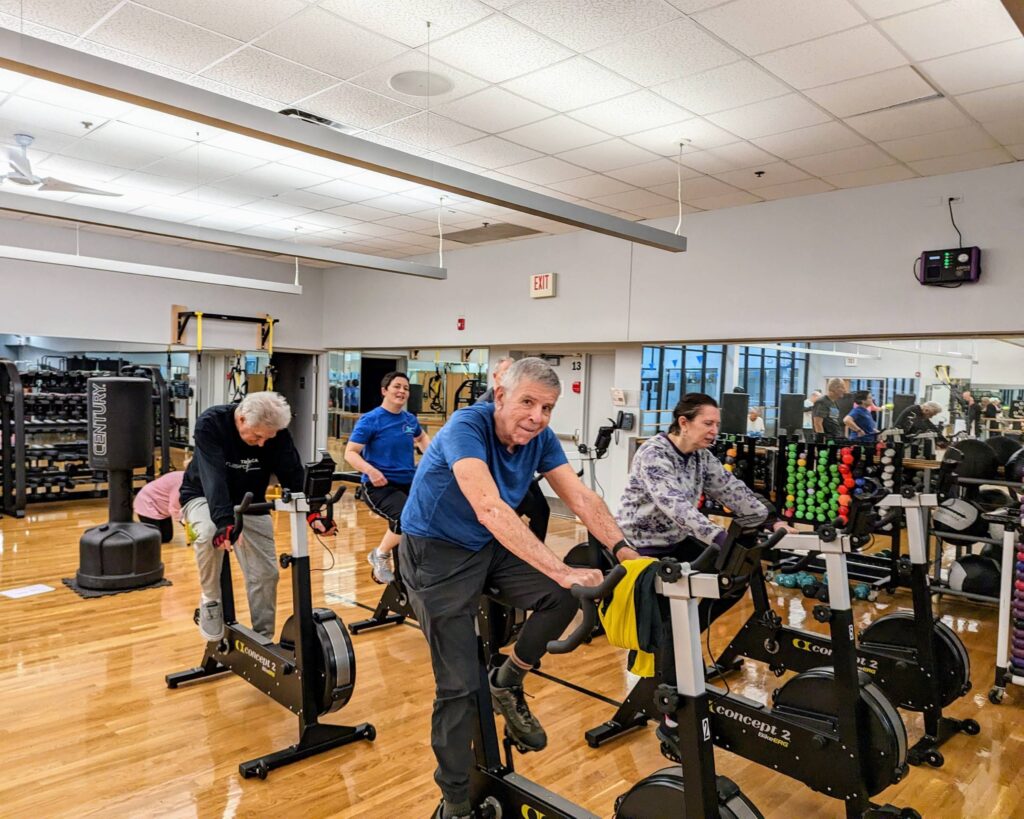
Our team is continually learning, collaborating and developing the most innovative, fun and impactful exercise programs backed by the latest evidence-based research.
It’s normal to feel unsure about starting. Here’s what people with muscular dystrophy ask us most.
Still have a question? Call (312) 465-3921
For many people, yes, when it’s supervised and dosed carefully. Research on several types of muscular dystrophy suggests that aerobic and low-to-moderate strength training is safe and can improve fitness and muscle function. Because some types also affect the heart and breathing muscles, please check with your neurologist or cardiologist before starting a new program.
It depends on your type of muscular dystrophy and how it affects you, but programs often include:
Yes, which is why guidance matters. Very intense or exhausting workouts, and heavy eccentric (“lowering”) exercises, can strain weakened muscles. A good rule is how you feel the next day: if you’re more tired or sore than usual 24 hours later, or your daily activities are harder, the dose was too high. Stop and contact your doctor if you have severe muscle pain or dark, cola-colored urine after exercise.
Yes. People with Duchenne need extra care: gentle, low-resistance activity is encouraged, while heavy strength training and eccentric exercise are generally avoided. Your program should be planned together with your neuromuscular care team.
There isn’t enough research yet to say that exercise slows muscular dystrophy. What studies do suggest is that well-planned exercise can help maintain strength and fitness, manage fatigue and support daily function and quality of life.
Every program is tailored to your current ability level and goals. We start where you are, progress slowly and adapt exercises for fatigue, balance or weakness so every session feels challenging but doable.
Every member starts with a comprehensive movement evaluation, unique to your diagnosis. We measure your strength, endurance, balance and walking using the latest tools and technology, then work with you to set your personal goals. From there you train one-on-one with a Neuro Exercise Specialist. Learn more or request an assessment.
We help you understand how exercise can support your daily abilities and build a program at the right dose for your body. Our Neuro Exercise Specialists work alongside your neurologist, cardiologist and physical therapist so your program fits your full care plan.
Every member begins with a comprehensive movement evaluation using the latest tools and technology. Each assessment is unique to your diagnosis and sets your personal goals.
Want to connect with us or request an assessment? Complete the form and a member of our team will be in touch shortly.

THINK BIG. MOVE STRONG. NEVER QUIT.
Everyone with a neurological condition has the opportunity to significantly benefit from specialized exercise and wellness programs.
info@movement-revolution.com917 N. Orleans St.
Chicago, IL 60610
Mon–Fri 7:30am–5:30pm
Sat 7:30am–12:00pm
151 S. Pfingsten Rd., Suite V
Deerfield, IL 60015
Mon–Fri 8:00am–5:30pm
3S012 Route 53
Glen Ellyn, IL 60137
Mon–Fri 8:00am–5:00pm
Plus classes at community sites across Chicagoland. All locations →